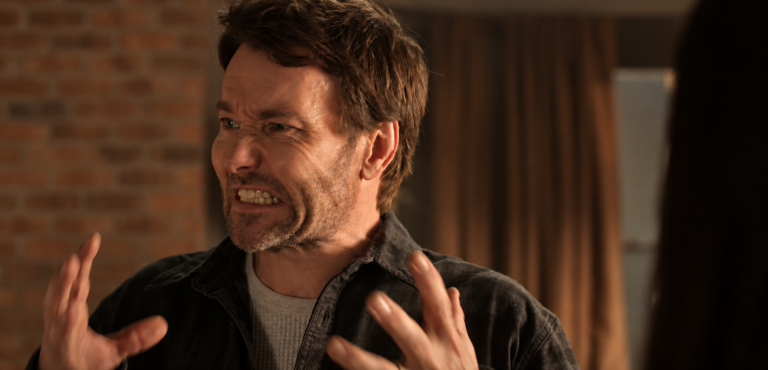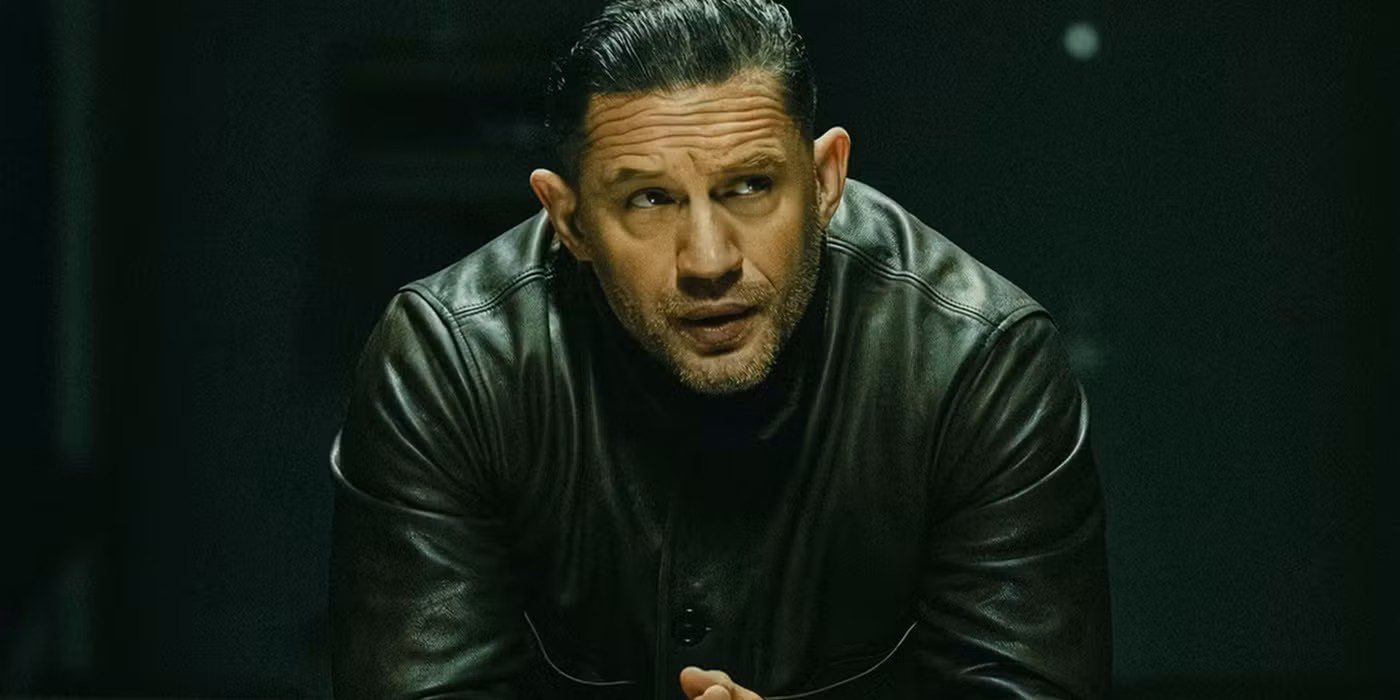
Tom Hardy’s reported MobLand exit raises questions about Harry Da Souza’s future on the series.
Tom Hardy was reportedly removed from MobLand after Season 2, but the bigger question is whether the show can survive without Harry Da Souza.
Reports about Tom Hardy’s future on MobLand have turned into more than a simple casting story. According to multiple reports, Paramount chose not to pick up Hardy’s option for a potential third season after alleged behind-the-scenes clashes during Season 2 production. Those reports have raised an obvious question: is Tom Hardy hard to work with, or did MobLand just lose the character holding the show together?
In the video below, I break down the reports, Hardy’s past on-set reputation, the production reality behind these kinds of disputes, and why Harry Da Souza may be too important for MobLand to lose.
What Was Reported About Tom Hardy and MobLand?
The reporting around Hardy’s MobLand exit centers on alleged clashes during production. Entertainment Weekly reported that Hardy was reportedly fired from the Paramount+ crime drama after Season 2, with claims involving lateness, attempts to change dialogue, resistance to the show becoming more ensemble-focused, and tensions with producers. The report also says the situation nearly led co-creator Jez Butterworth to quit.
People reported that Hardy is not expected to return for a potential third season, while also noting that representatives for Hardy, Paramount, and 101 Studios had not commented. That is important because, at this stage, the public version of the story is still based on reporting and unnamed sources rather than an official explanation from Hardy or Paramount.
So the fairest way to frame this is not that every allegation has been proven. The fair framing is that Hardy’s future with MobLand is reportedly in serious doubt, and the reasons being reported involve production tension, creative clashes, and the direction of the show.
Is Tom Hardy Hard to Work With?
Tom Hardy does have a brief but real history of being described as difficult to work with, but it is not broad enough to say every production has had the same problem with him.
One early example comes from Star Trek: Nemesis. Patrick Stewart later described Hardy as “odd” and solitary on that set, saying Hardy mostly stayed in his trailer and did not really build rapport with the rest of the cast. That does not mean Hardy was hostile, but it does show that even early in his career, people noticed he could be difficult to connect with on set.
The much bigger example is Mad Max: Fury Road. Vanity Fair’s excerpt from the oral history Blood, Sweat & Chrome described serious tension between Hardy and Charlize Theron during the making of the film. Theron later said there was a confrontation where she felt unsafe, and Hardy later acknowledged that he was overwhelmed and said Theron needed a better partner in him.
That history does not prove the MobLand reports are true. But it does explain why the question did not come out of nowhere. When a new report claims lateness, dialogue disputes, and production clashes, people are going to connect that to the most public examples from Hardy’s past.
Why Lateness and Script Changes Matter on a Set
The part audiences often miss is how stressful these situations can become for everyone around the star.
People hear “creative differences” and picture two artists debating the best version of a scene. But a film or TV set is not just a creative space. It is a schedule, a budget, a location, a crew, a transportation plan, a lighting setup, a production office, and a clock that never stops running.
So if an actor is late, wants dialogue changes, or keeps reopening creative decisions during production, that does not only affect the director or writer. It affects the entire machine.
The art department may have been there hours before the actors arrived. Set dressers may have already built out the room. Assistant directors may be managing every minute of the day. Coordinators may be tracking availability, locations, travel, overtime, and other production limits. On some productions, even a small delay can create a ripple effect across the whole day.
That is why lateness alone may not be the entire problem. Productions deal with lateness. They deal with changes. They deal with pressure. The bigger issue is frequency. One request may not break the day. Repeated requests can wear everyone down.
At a certain point, the problem may not be one note or one change. The problem becomes the feeling that settled decisions are never really settled.
The Executive Producer Problem
The MobLand situation is also more complicated because Hardy was not just the star of the show. He was also an executive producer.
That matters because it changes the power dynamic. As an actor, Hardy is there to perform the role. As an executive producer, he also has authority attached to the project. So if there is a creative disagreement, it is no longer simply actor versus producer. It can become producer versus producer, creator versus creator, authority versus authority.
That kind of dual role can be difficult on any production. An actor may be thinking from inside the character. A producer or showrunner may be thinking about the whole season, the ensemble, the schedule, the edit, and the budget. Both perspectives can be valid, but they are not always compatible in the moment.
That is where trust can break down. If decisions are debated during pre-production, that is normal. If those same decisions keep getting reopened once the cameras are rolling, the production can start to feel unstable.
Was Tom Hardy Right About MobLand Becoming Too Much of an Ensemble?
One of the more interesting parts of the reporting is the claim that Hardy was unhappy with MobLand becoming more of an ensemble. That wording matters.
“Less ensemble-focused” does not automatically mean “only about Tom Hardy.” It could mean Hardy thought the show was adding too many characters, spreading itself too thin, or moving Harry Da Souza too far away from the center. Those are different arguments.
But if the issue really was the ensemble structure itself, then creatively, that is harder to understand. MobLand is built in the tradition of sprawling crime stories where multiple characters have separate agendas and those agendas keep crashing into each other. Guy Ritchie is an executive producer on the series, and Paramount+ has described the show as coming “from Guy Ritchie.”
That matters because ensemble crime storytelling is part of the Guy Ritchie language. Lock, Stock and Two Smoking Barrels, Snatch, and The Gentlemen all work by following multiple players, schemes, betrayals, and collisions. That kind of structure is not a flaw. It is part of the appeal.
So if Hardy truly wanted MobLand to move away from that kind of ensemble storytelling, I think he was wrong. The ensemble is part of what makes the show work.
Why MobLand May Not Work Without Harry Da Souza
Here is where the story gets more complicated.
Even if the reports about Hardy are true, and even if Paramount had legitimate production concerns, MobLand may have created a much bigger creative problem for itself.
Harry Da Souza was not just another character. He was the glue.
Harry connected the family politics, the street politics, the business side, the violence, the cleanup, and the emotional fallout. He moved between Conrad, Maeve, Kevin, Jan, Eddie, the Harrigan family, and the outside threats. He was not just part of the ensemble. He was the character who made the ensemble readable.
That is why removing Hardy from MobLand is not like removing one supporting character from a crime drama. It removes the person who tied the show’s moving pieces together.
Ensemble crime dramas can have many strong characters, but they usually still need a center. They need someone who moves between worlds. They need a character who can translate the chaos for the audience while still being trapped inside it.
Harry Da Souza was that character.
So Did Paramount Solve a Problem or Create a Bigger One?
That is the real question.
Maybe the reports are accurate. Maybe Hardy was difficult. Maybe the lateness, script disagreements, dialogue changes, and creative clashes became too much. Productions have limits, and if one person is repeatedly disrupting the schedule or undermining other people’s jobs, it is easy to understand why a studio would eventually draw a line.
But even if Paramount solved a production problem, it may have created a storytelling problem.
Because without Harry Da Souza, MobLand loses the character connecting the entire show. The ensemble may still have major names. It may still have strong actors. It may still have the crime-family structure. But Harry was the fixer, the interpreter, and the connective tissue.
So the issue is not only whether Tom Hardy is hard to work with. The bigger issue is whether MobLand can survive without the character Tom Hardy played.
And right now, that is the harder sell.
About the Author