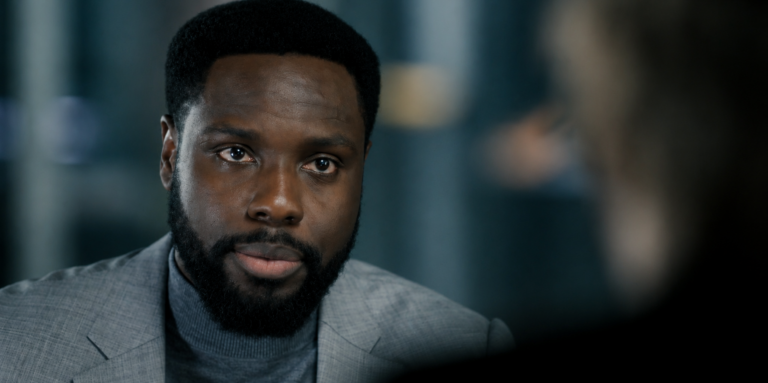
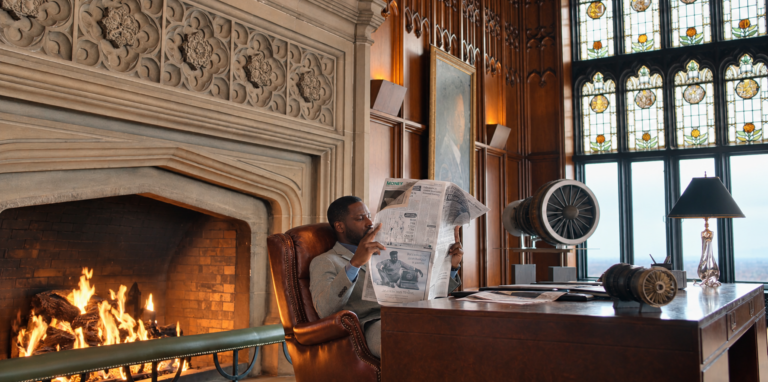
Leighton’s office contains furnishings that match the earlier council meeting room.
Dark Matter Season 2 Episode 6 connects Leighton’s office to the earlier council meeting through matching windows, furnishings and display pieces. Other hidden details raise questions about Charlie’s identity and drug supply, while callbacks reveal how Jason and Daniela are responding to their separation.
The six clues below explain what those connections establish, why they belong together, and where the episode still leaves room for interpretation.
Spoilers through Season 2 Episode 6.
Watch the full breakdown above, then join me every Sunday at 1 PM Pacific for Dark Matter theories and TV discussions.
1. Is Leighton’s office the council meeting room?
Leighton’s Episode 6 office matches the earlier council room in both layout and furnishings. The comparison extends from its stained-glass windows to smaller objects positioned around the desk. However, matching interiors alone cannot establish that both scenes occur in the same reality.


Which objects connect the two scenes?
The wide council shot establishes the room’s most recognizable features: a long conference table beneath a chandelier, surrounded by stained-glass windows. The chandelier has tiers of candle-shaped lights and a dark rounded centerpiece. The windows repeat circular designs above smaller orange floral patterns.
Episode 6 preserves that arrangement when Leighton stands beside Blair. Those architectural features provide the first match, but the movable objects make the comparison more precise.
Behind the earlier council, between the seated Leighton and the man on his right, stands a large gold-colored display. Its spokes radiate outward like a ship’s wheel. During Blair’s visit, it remains beside the windows near the seating area as Leighton leads her toward the exit.

The opposite camera angle reveals another group of matches. The earlier shot facing the hooded Leighton and the woman beside him shows the fireplace side of the room. Behind the woman are framed artwork and a large turbine-shaped display near the window.

Leighton’s newspaper scene returns to those features. The fireplace, artwork and turbine-looking display occupy corresponding positions. A smaller cylindrical object with a gold-colored, wheel-like face also rests on the desk, matching the piece visible in the earlier reverse angle.
That desk object is separate from the larger wheel-like display across the room. Distinguishing them gives the comparison two individual reference points. The figurines and other display pieces provide further matches.
How did Leighton finance his operation?
Leighton says he introduced the microprocessor and then the home computer to this world. That confession explains the technological leap McNamara and his relative questioned in Episode 3.
To McNamara, the Vance company’s progress looked difficult to account for. Leighton’s knowledge from another reality supplies the missing explanation. Technology familiar to him gave the company an advantage here and helped provide resources for his project.
This also changes the significance of the world the Dessens chose. Its limited technology offered them a chance to disappear, but it offered Leighton a chance to become influential. Their refuge and his business opportunity depend on the same technological gap.
Does his two-year residency prove another Leighton exists?
No. His residency raises a chronology question without resolving his identity. Leighton says he has spent almost two years here, so his operation predates the visit with Blair.
That makes the earlier encounter outside Jason’s apartment more complicated. The scene gave the impression of a traveler discovering Jason, whereas Episode 6 reveals an established base. Another branch remains one possible explanation; concealing prior knowledge is another.
Why build beneath the office?

Leighton describes old freight tunnels that exist in a similar state across the realities he can access. Corresponding underground spaces could offer useful locations for operations across worlds.
The tunnels also place the project away from the exposed entrances where other people have discovered the Box. The episode establishes the location and the larger structure below it. Its exact capabilities remain unrevealed.
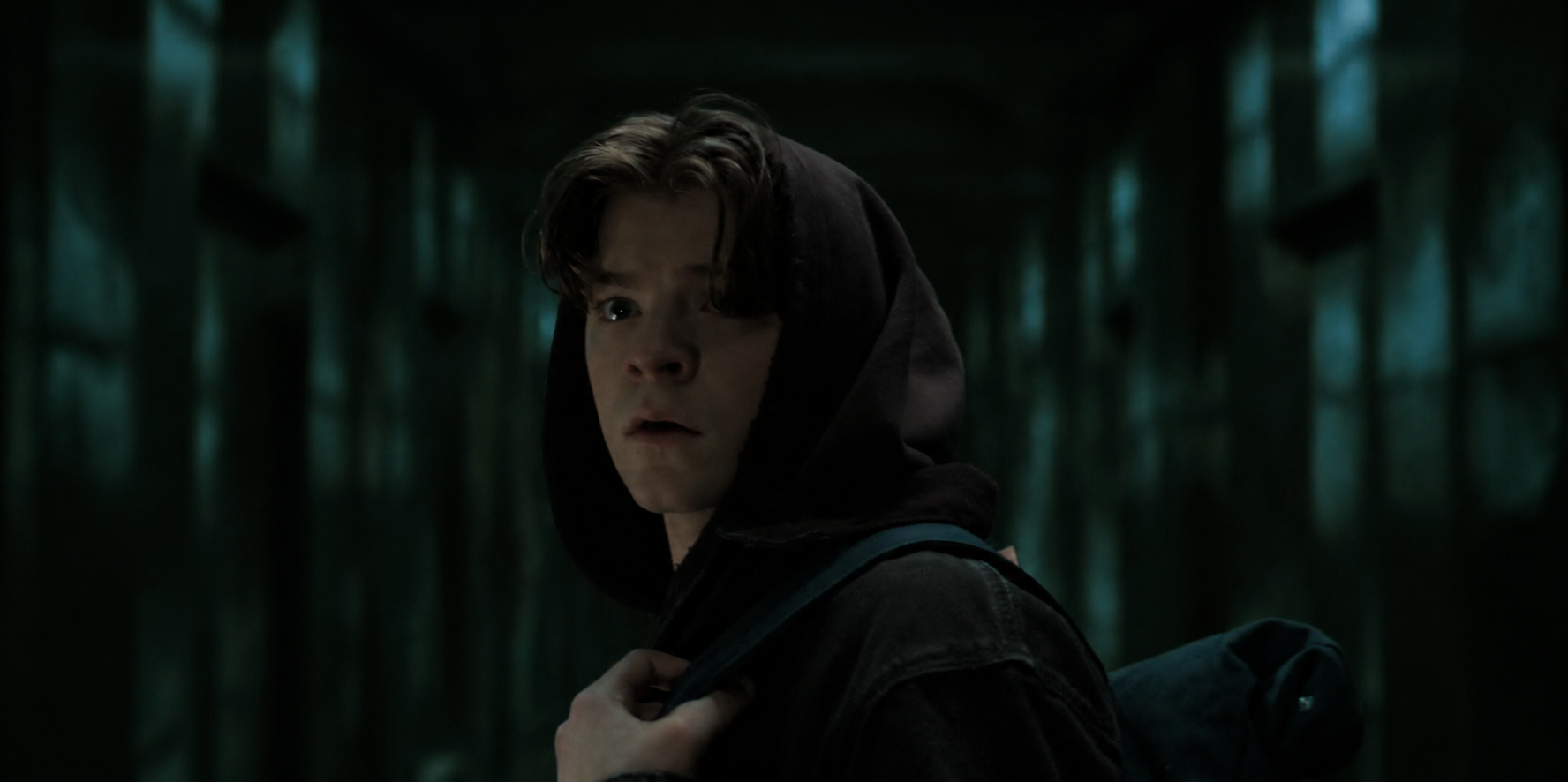
2. Could Episode 6 follow a different Charlie?
Another Charlie is possible under the show’s branching pattern, but Episode 6 does not confirm a switch. The supporting clue is an earlier moment when the tornado-world storm separated Charlie from his parents.

Where could Charlie’s journey have branched?
The family opened the Box door into the storm, and the bag of ampules got pulled outside. Jason went after it. Daniela followed, but the wind slammed the door shut behind them, leaving Charlie alone inside.
Charlie therefore faced his own navigation problem. His parents were outside, while he had access to the corridor. Opening a door meant trying to reach the tornado world where he had just left them.
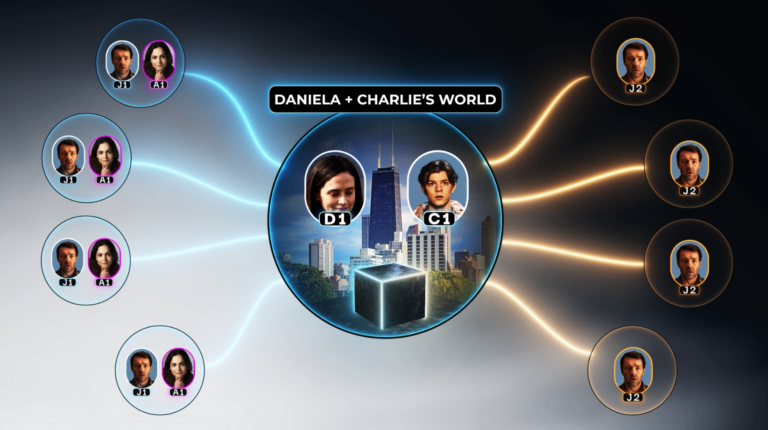
Season 1 established that Jason’s corridor journeys could produce multiple returning versions. Each remembered the same family and believed he belonged with them. Applying that pattern to Charlie’s separation creates a plausible branching point.
One version could reopen the door and reunite with his parents. Another might reach a corresponding storm world and continue searching. Both would remember the ampules disappearing and Jason and Daniela running outside.
What does the ending actually establish?
The final scene shows Charlie alone in the corridor. It does not identify him as a new variant or show a branch forming during the earlier storm.
My interpretation is that the tornado-world separation gives us a specific event to test against future revelations. It makes the alternate-Charlie idea more concrete, while leaving the familiar Charlie as a viable reading of the ending.
The same distinction between shared memories and individual journeys appears in my analysis of the wrong-Jason theory.
3. Why does Charlie drink the Box drug?
Charlie takes his dose orally, but the episode does not explain where that dose came from or why he uses that method. The difference stands out because the family previously relied on injections.

Ryan’s recreated formulation drew attention for its oral use. Charlie swallowing the ampule’s contents therefore invites a comparison with Ryan’s work, rather than treating every dose as interchangeable.
However, the method alone cannot establish a connection between Charlie and Ryan. The show also has not demonstrated that the earlier formula would fail if swallowed.
The missing information concerns the supply. If Charlie used Jason’s ampules, either their oral use was always possible or something about the supply changed. If he obtained his dose elsewhere, that preparation remains unseen.
Until the source or formulation becomes clear, this is an unresolved drug detail. Calling it a continuity error would go beyond what the scene establishes.
4. Who is Dr. John Lindley in Dark Matter Episode 6?
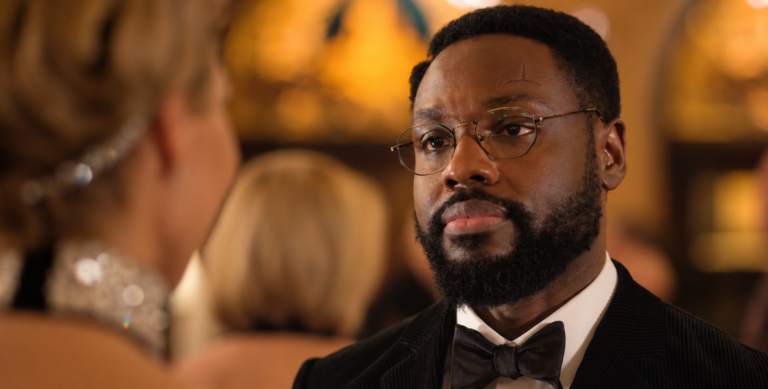
Dr. John Lindley is the professor Blair introduces to Jason at the gala. His counterpart appeared with Jason2 in the Episode 3 flashback, connecting the two Jasons through a recurring intellectual influence.


What does the Episode 3 callback add?
The earlier discussion examined how technological breakthroughs create opportunity alongside harm. Ships enable travel and commerce, but they also facilitate slavery and the spread of disease. That tension fits the Episode 3 title, “Everything Beautiful, Everything Terrible.”
At the gala, Jason1 admits that he wants to publish groundbreaking work. Lindley’s return places that ambition beside an earlier conversation about the consequences of discovery.
Jason1 already understands those consequences personally. The Box damaged his family’s life, yet he still wants scientific achievement. The callback connects his ambition to Jason2’s history without proving that he will make the same choices.
Blair also says Lindley never met the Jason native to this world. That separates the visitor’s familiar connection from the local Jason’s biography.
5. How does Daniela’s reunion connect to Jason’s Episode 5 story?
Both stories use a reunion with a living parent to connect grief with creative work. Episode 5 follows a Jason who finds his mother alive. Episode 6 brings Daniela to a version of Gabriel, her stepfather.


The circumstances differ. The mother’s Jason died as a child, while the Daniela native to Gabriel’s world remains alive elsewhere. Neither traveler can simply return to an untouched version of their original family relationship.
Nevertheless, both visits reveal formative connections. Jason’s reunion helps explain his knowledge of sign language. Gabriel entered Daniela’s life when she was eight, and painting together suggests how art connects their relationship.
Why pair furniture-building with painting?
Jason builds furniture while establishing a life beyond the family he lost. Daniela begins painting beside Gabriel after struggling to reconnect with her work. Each story gives recovery a physical activity rather than leaving it entirely in conversation.
Gabriel’s painting after his brother’s death makes that connection explicit. His example suggests that Daniela can bring grief into her art instead of waiting for the grief to end.
Then the phone call interrupts the comfort. Gabriel speaks to the daughter who belongs to this world while the visiting Daniela stands within that familiar relationship. The call exposes the limit of her refuge: someone else’s life already occupies it.
6. What is Jason writing at the end of Episode 6?
Jason is preparing a scientific paper on quantum entanglement in the macroscopic world. The typewriter scene turns his research into a manuscript, following his admission that he wants to publish groundbreaking work.

Has Jason abandoned his plan to protect the family?
The manuscript does not establish that he has abandoned it. His desire to shut down the Box and his desire for recognition can coexist.
What changes is the potential audience for his work. Drawings inside his apartment support private investigation. A scientific paper organizes that investigation into something he could present to other people.
That creates tension with the family’s decision to disappear. Publishing a major discovery could draw attention to Jason in a world chosen partly for its limited technology.
Leighton provides a comparison within the same episode. His imported knowledge changed the Vance company’s position and helped support an underground operation. Jason’s research could also affect this world, although the episode has not shown him publishing it.
The detail to follow is whether the manuscript remains private. Its existence gives Jason’s ambition a concrete form while his family continues moving in different directions.
What should viewers watch for next?
The office comparison establishes recurring furnishings. Charlie’s drug use establishes a change in method. The manuscript establishes Jason’s preparation to share his work. Each clue supports a different question, and each has limits.
Future scenes could clarify Charlie’s supply, identify another branch, or reveal what Leighton’s structure can do. For now, those outcomes remain possibilities rather than answers supplied by Episode 6.
Do you think the final Charlie scene follows the version we know or another branch? Share your interpretation and any hidden details I missed in the comments.
Watch the full Dark Matter Season 2 Episode 6 hidden-details video. Like, hype, subscribe and share it with anyone watching the series, then join me Sunday at 1 PM Pacific for the live discussion.
About the Author