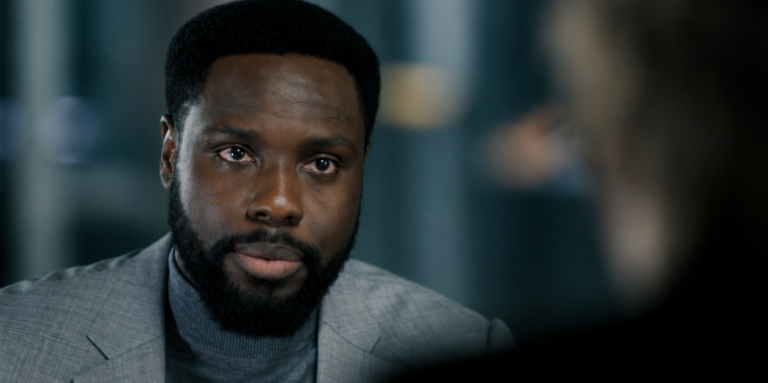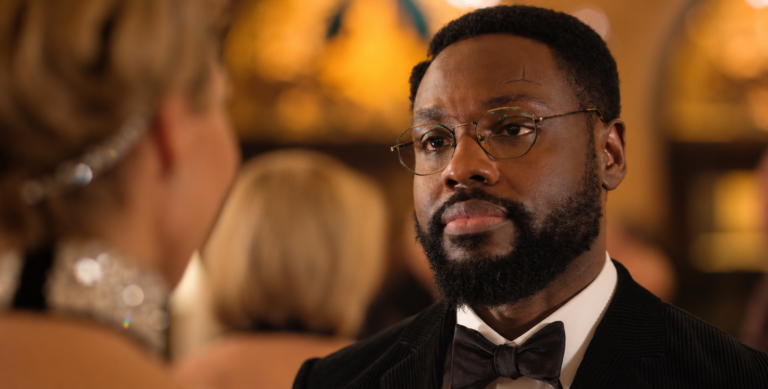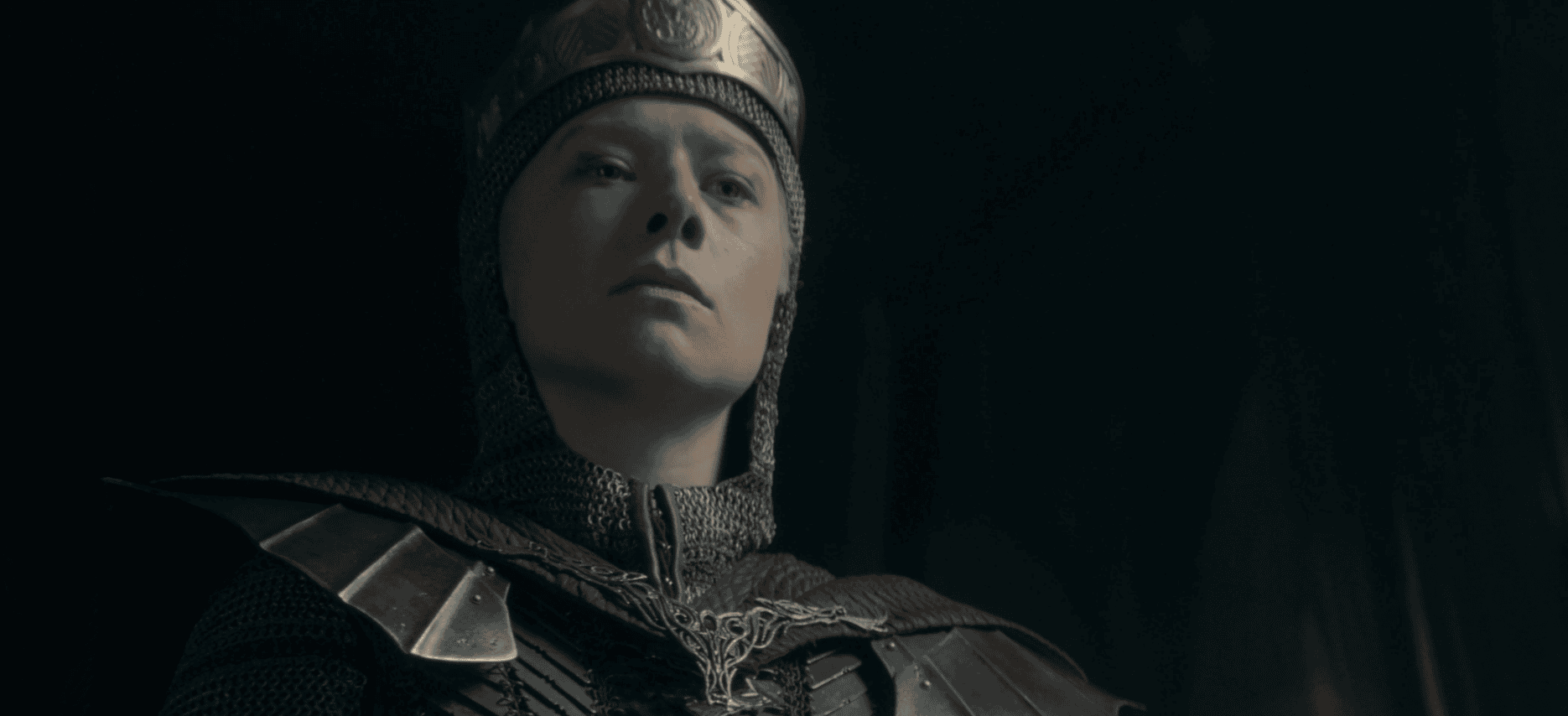
Rhaenyra embraces a more dangerous understanding of her power and destiny in the Season 3 finale.
The House of the Dragon Season 3 ending leaves Rhaenyra on the Iron Throne but in a weaker position than her victory suggests. Helaena dies by suicide, Ulf turns Silverwing against Rhaenyra’s army at Tumbleton, Aegon and Sunfyre return, and Daeron disappears during the destruction without a confirmed death. The finale sets up Season 4 as a fight between an increasingly isolated Rhaenyra and the reunited forces of Aegon and Aemond.
The episode answers how the Battle of Tumbleton changes the war, but it deliberately leaves several character fates and consequences unresolved. Here is what happened, what the finale confirms, and what remains uncertain.
How Did House of the Dragon Season 3 End?
House of the Dragon Season 3 ends with Helaena jumping from her window in the Red Keep. When Rhaenyra enters Helaena’s chambers, she finds the completed tapestry depicting Helaena’s fall and a blood-covered Rhaenyra seated on the Iron Throne.
At the same time, the war has changed on several fronts:
- Ulf and Silverwing attack Rhaenyra’s forces and burn Tumbleton.
- Ormund Hightower and Roderick Dustin die during the battle.
- Daeron disappears in the destruction, although his death is not shown or confirmed.
- Aegon reunites with Sunfyre and joins Aemond to challenge Rhaenyra.
- Rhaenyra rejects the authority of the Faith and publicly presents herself as the ruler chosen to fulfill an ancient prophecy.
Rhaenyra technically controls King’s Landing at the end of the season, but Helaena’s death, the destruction at Tumbleton, Ulf’s betrayal and Aegon’s return make that control increasingly unstable.
Why Did Helaena Kill Herself?
Helaena kills herself after prolonged imprisonment, trauma and prophetic visions leave her unable to see a path forward. The episode does not give her a final speech explaining one single reason. Instead, her death is presented as the culmination of everything she has endured and everything she already knows is coming.
What the episode confirms
Helaena deliberately jumps from the window. Her completed tapestry shows that she foresaw both her own fall and Rhaenyra sitting on a blood-soaked Iron Throne. This means her death was not an impulsive accident.
What the evidence suggests
Helaena appears to view death as the only escape from her captivity and from the violent future she has foreseen. Her prophetic ability is a burden because she can recognize the shape of coming events without having the power to stop them.
Phia Saban described the embroidery as an evolving symbol connected to Helaena’s death and her prophetic story. The finale turns the tapestry into Helaena’s last warning, even though she never explains it aloud. Saban discussed Helaena’s final episode with Entertainment Weekly.
What Did Helaena’s Tapestry Mean?
Helaena’s tapestry appears to predict two events: her own death and Rhaenyra’s bloody reign. The image of Rhaenyra on the Iron Throne does not necessarily mean Helaena is declaring who legally deserves the crown. It shows that Rhaenyra’s victory will be surrounded by death and will not produce the stable rule she believes destiny has promised her.
That warning arrives after Rhaenyra embraces a more dangerous understanding of the Song of Ice and Fire. She no longer treats the prophecy as a responsibility passed down through her family. She uses it to justify her own authority and presents herself as a ruler chosen by forces above the laws and religion of Westeros.
Showrunner Ryan Condal called Rhaenyra’s change a major shift in her relationship with the realm. Her rejection of the Faith may strengthen her self-image, but it gives ordinary people another reason to see the Targaryens as foreign rulers who place themselves above everyone else. Condal explained the conflict between Targaryen power and the Faith.
Is Daeron Dead in the House of the Dragon Season 3 Finale?
Daeron is not confirmed dead at the end of House of the Dragon Season 3. He disappears during the destruction of Tumbleton, but the episode does not show his body or give another character confirmation that he died.
The strongest inference is that Daeron survived and that the show is withholding his location for Season 4. Killing a major dragonrider off screen immediately after spending a season developing him would provide little payoff. His bond with Tessarion and his place in the Hightower campaign also give the final season unfinished story to resolve.
However, his survival remains an inference rather than a confirmed fact. The finale intentionally leaves Daeron’s fate uncertain. A finale death breakdown likewise identifies Daeron as the episode’s unresolved fate.
Why Did Ulf Betray Rhaenyra at Tumbleton?
Ulf betrays Rhaenyra because his loyalty was always conditional. He wanted the status, rewards and freedom that came with riding Silverwing, but he never developed a genuine commitment to Rhaenyra’s cause. Once he felt disrespected and restricted, the power of having a dragon allowed his resentment to become catastrophic.
His actions at Tumbleton also show why recruiting dragonseeds was so dangerous. Rhaenyra gained riders quickly because she needed to increase the number of dragons under her control, but a dragon bond did not create discipline, political loyalty or military judgment.
Ulf does more than switch sides. He burns soldiers and civilians with little concern for either army, turning Tumbleton into indiscriminate destruction. The point is not simply that Rhaenyra chose the wrong man. She created a new center of power that she could no longer control.
That makes Ulf’s betrayal a direct consequence of one of Rhaenyra’s earlier solutions. The dragonseeds helped her solve an immediate military problem, but they also gave individuals with their own grievances the ability to reshape the war.
Who Died in the Battle of Tumbleton?
The major confirmed deaths connected to the Season 3 finale include:
- Helaena Targaryen: Dies by suicide after jumping from the Red Keep.
- Ormund Hightower: Dies during the Battle of Tumbleton.
- Roderick Dustin: Dies fighting at Tumbleton after leading the Winter Wolves.
- The High Septon: Is killed after refusing to validate Rhaenyra’s claim on her terms.
- Kat: Hugh Hammer finds his wife dead in the destruction at Tumbleton.
Daeron is missing, not confirmed dead. Ulf, Hugh, Aegon, Aemond and Rhaenyra all survive the finale.
The battle is one of the largest sequences the series has produced. Condal described Tumbleton as one of Season 3’s two “mega-battles” and said the production had to balance the script’s ambitions with the available schedule and budget. He explained how the battle brought several season-long character stories together.
How Are Aegon and Sunfyre Alive?
Aegon and Sunfyre survived their earlier injuries and return together in the Season 3 finale. Their reappearance confirms that Rhaenyra’s control of King’s Landing did not end Aegon’s claim or remove him from the war.
Aegon’s reunion with Aemond is practical rather than affectionate. The brothers have betrayed and harmed each other, but each now possesses something the other needs. Aegon provides the rival claim and the public identity of the Green cause, while Aemond provides Vhagar and military power.
Their alliance gives Season 4 its clearest conflict. Rhaenyra has the throne, but Aegon is alive, mounted on Sunfyre and prepared to challenge her again.
Tom Glynn-Carney’s performance has also changed how part of the audience views Aegon. Condal said he received feedback from viewers who did not expect to root for the character but now do, crediting Glynn-Carney with making Aegon’s return convincing. Condal discussed Aegon’s underdog arc after the finale.
Why Did Rhaenyra Kill the High Septon?
Rhaenyra kills the High Septon because he refuses to endorse her authority in the way she demands. His refusal challenges more than her political claim. It rejects the belief that her connection to dragons and prophecy places her above the Faith and the institutions of Westeros.
By killing him and declaring herself chosen by the gods of Old Valyria, Rhaenyra replaces the need for religious approval with her own interpretation of destiny. This is a major escalation in her character arc. She is no longer merely defending a claim inherited from Viserys; she increasingly believes opposition to her rule is opposition to a sacred purpose.
The decision may secure obedience in the moment, but it also creates the conditions for resistance. Most of Westeros follows the Faith of the Seven. Rhaenyra’s public rejection of that faith makes her appear less like a rightful queen and more like a foreign conqueror ruling through dragons.
How Does the Season 3 Ending Set Up Season 4?
The ending sets up five major conflicts for the fourth and final season:
- Rhaenyra’s control of King’s Landing: She holds the capital, but her political and religious support is deteriorating.
- Aegon and Aemond’s return: The brothers now have two surviving dragons and a shared reason to remove Rhaenyra.
- The consequences of Ulf’s betrayal: Rhaenyra must respond to a dragonrider she helped empower but cannot control.
- Daeron’s fate: The show must reveal whether Daeron and Tessarion survived Tumbleton and where their loyalties lead next.
- Public resistance to Targaryen rule: Helaena’s death, the High Septon’s murder and the devastation caused by dragons can turn the people against the entire dynasty.
Season 4 must complete the Dance of the Dragons in eight episodes. That is a substantial burden because the Season 3 finale resolves the Battle of Tumbleton while leaving most of its political and emotional consequences for the final season.
Why Did the House of the Dragon Season 3 Finale Feel Underwhelming?
The Season 3 finale can feel underwhelming because it provides spectacle and major developments without enough aftermath. Tumbleton is a large and effective battle, but nearly every major event creates another question for Season 4 instead of completing a season-long arc.
Helaena dies, but the episode has little time to show the consequences. Daeron disappears without a confirmed fate. Ulf betrays Rhaenyra, but the political response has not begun. Aegon returns, but his attempt to reclaim the throne remains ahead. Rhaenyra embraces a harsher identity, but the results of that transformation belong to the next season.
Early Reddit reaction was more positive than uniformly disappointed. Viewers praised the battle, the Winter Wolves, Phia Saban and Tom Glynn-Carney. The repeated criticism was structural: Daeron’s unresolved fate, the lack of time for aftermath and concern that the series must finish too much story in only eight episodes. The post-episode discussion reflects that mixture of enthusiasm and concern.
As an individual episode, “The Treasons at Tumbleton” delivers action, death and several important turns. As the final chapter before a potentially two-year wait, it feels less complete. The battle ends, but the season does not provide enough space to show what that ending means for the people who survived it.
What Is the Main Meaning of the House of the Dragon Season 3 Ending?
The main meaning of the ending is that Rhaenyra has won the throne while losing the stability, loyalty and moral authority required to keep it. Helaena’s tapestry turns that contradiction into the finale’s final image: Rhaenyra sits where she believes destiny placed her, but blood surrounds the victory.
Aegon’s return proves that the succession war is not over. Ulf’s betrayal proves that dragons cannot guarantee loyalty. The High Septon’s death shows that fear cannot manufacture legitimacy. Helaena’s death becomes the human cost of a conflict in which every faction claims that its violence serves a larger purpose.
Rhaenyra ends Season 3 with more visible power than any other character. She may also be more isolated than she has ever been.
About the Author